Should You Use AI for Your Product Photos?
A practical guide for artisans weighing the pros and cons of AI image tools for their handmade business.
If you've been selling on Etsy or other online platforms such as social media, you know good photos matter. But professional photography is expensive, and taking great shots yourself takes time you'd rather spend making things. AI image tools promise an easier way, but should you use them?
The short answer: it depends on you, your products, and what matters most to your customers.
The Case Against AI Images
AI-generated photos can backfire. If your customer can tell the image has been altered or looks artificial, it creates doubt. Handmade buyers are already looking for authenticity. An obviously fake background or weird lighting might make them wonder what else isn't genuine.
AI also struggles with fine details. If you make intricate jewelry with tiny clasps, delicate embroidery with specific stitching patterns, or carved woodwork where every line matters, AI might change those details. For products where precision is part of the value, that's a problem.
There's also the question of what your brand stands for. If part of your story is doing everything by hand, using AI for photos might feel inconsistent with your values. Your customers might feel the same way.
The Case For AI Images
AI tools have gotten remarkably good at certain tasks and they are improving rapidly at more complex tasks. They can remove distracting backgrounds, fix lighting issues, clean up shadows, and even place your product in lifestyle settings that would be difficult to create yourself.
For many handmade products, AI's imperfections don't matter. Every hand-thrown mug is slightly different. Every bar of handmade soap has unique swirls. Every knitted scarf has subtle variations in tension. If your AI-enhanced photo shows a slightly different shade or texture than the exact item that ships, it's often no more misleading than showing one unit over another.
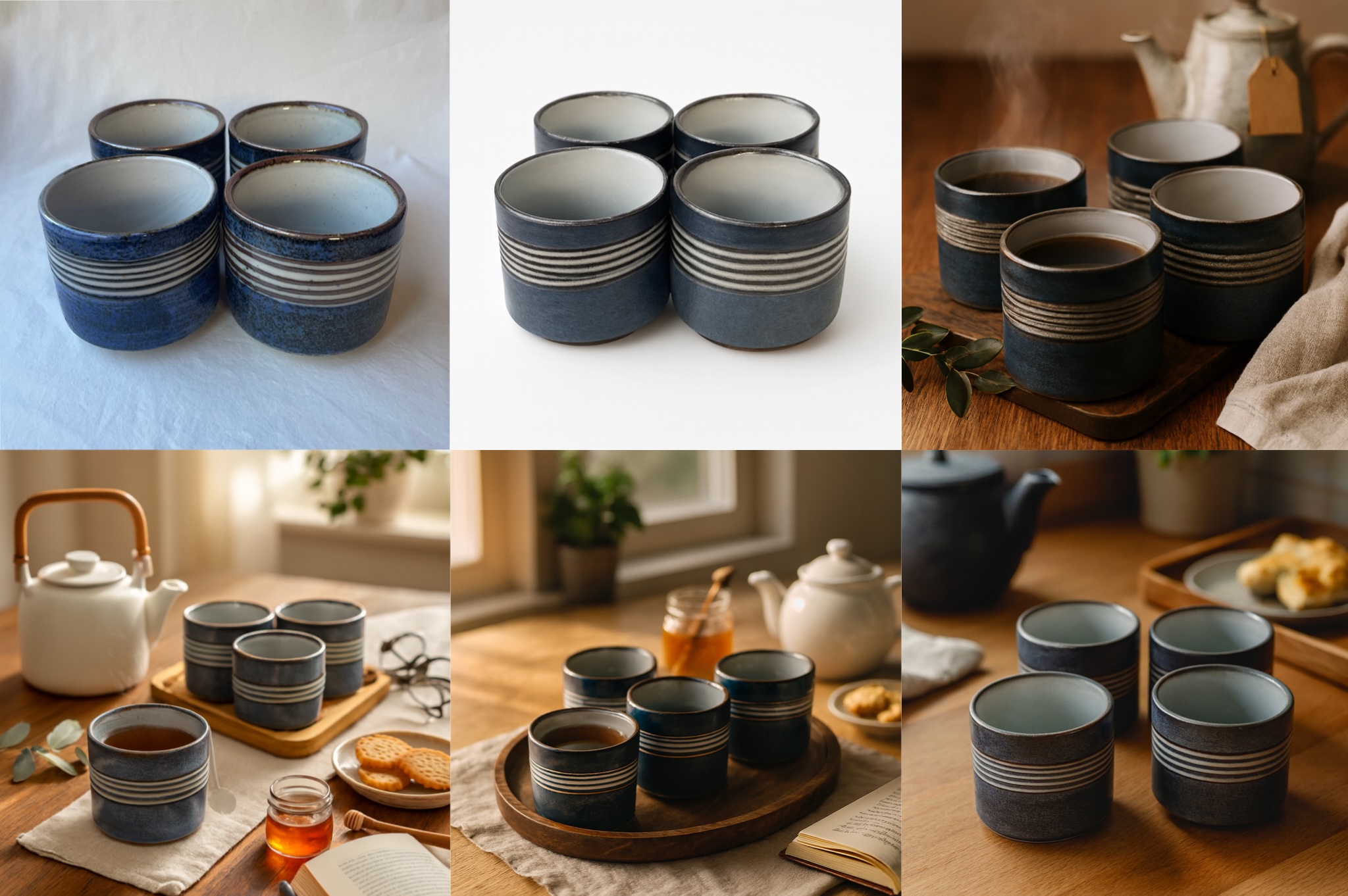
The practical benefits are real. AI can help you create a professional-looking catalog without a studio setup or photography skills. You can show your candles in a styled bathroom, your pottery on a dining table, or your leather goods in use, all from photos taken in your workspace.
Cost matters too. A single professional product photography session can run hundreds if not thousands of dollars. If you release new products regularly, those costs add up fast.
When AI Works Best
AI shines at enhancement and augmentation for products that do not have intricate detail. Starting with a decent photo of your actual product and using AI to improve the background, lighting, or setting works better than trying to generate product photos from scratch.
Tasks AI handles well:
- Removing cluttered backgrounds
- Adjusting lighting and color balance
- Creating consistent white backgrounds
- Placing products in simple lifestyle contexts
- Cleaning up minor imperfections in photos
Tasks where traditional photography wins:
- Showing intricate details and craftsmanship
- Demonstrating precise scale and dimensions
- Building trust through "behind the scenes" and "user generated" shots
A Hybrid Approach
Many successful artisans use both. They photograph their products traditionally to capture the details and craftsmanship, then use AI to enhance those photos or create additional lifestyle images. This gives customers both the authenticity of real photography and the polished presentation of edited images.
You might also use AI differently for different parts of your shop. Hero images and lifestyle shots could be AI-enhanced, while detailed product photos remain untouched.
What Matters Most
Think about your customers. Are they buying from you because they want something authentic and handmade? How important is transparency to them? Some makers mention in their shop policies that they use photo editing tools. Others don't bring it up.
Consider your products. Do subtle variations make AI's imperfections irrelevant, or do you need perfect accuracy?
Think about your capacity. Would time spent learning photography skills take away from making products, or is it part of the craft you enjoy?
AI for product photos isn't right or wrong. It's a tool that works brilliantly for some makers and poorly for others. The key is knowing what serves your business and your customers best.
© Verra Technology Corporation